
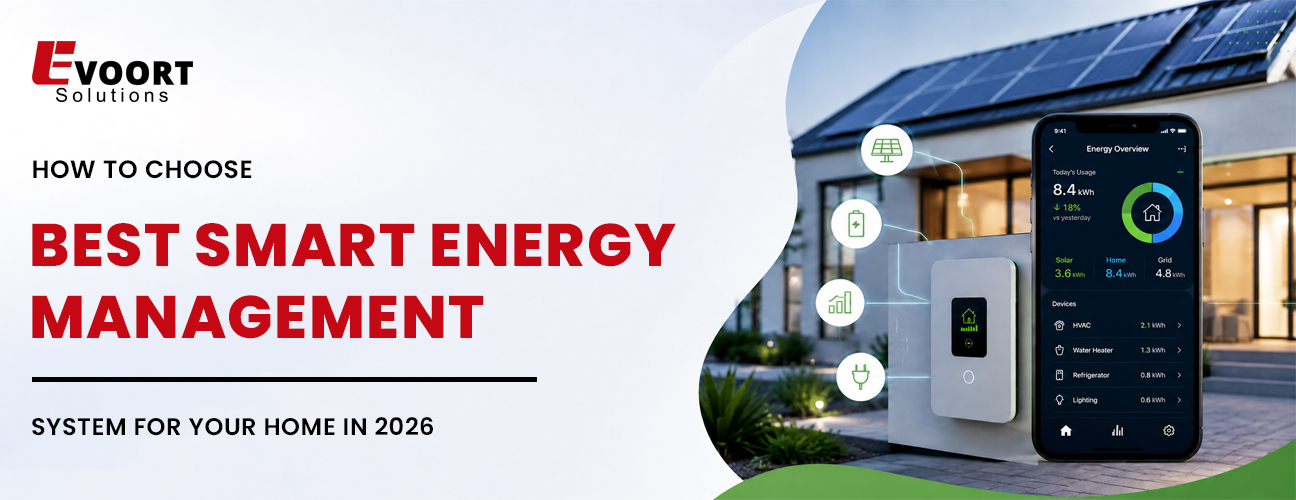
How to Choose the Best Smart Energy Management System for Your Home in 2026
Table of Contents
Increased costs of electricity, increased usage of energy, and the emergence of smart homes are altering the way homeowners go about managing energy usage. In 2026, homeowners will be embracing smart energy management systems that help monitor energy usage, automate appliances, and efficiently use energy.
Today’s homeowners are not only seeking convenience; they seek visibility, control, and savings. Smart energy management systems facilitate monitoring of energy usage in real-time, minimize wastage, and help optimize the consumption of electricity by devices.
This guide provides an overview of how smart energy management systems function, key features of the technology, types of systems available on the market, pitfalls of purchasing such systems, and trends guiding smart homes in 2026.
What Is a Smart Energy Management System?
Smart energy management technology refers to a technology-based solution that is utilized in monitoring, controlling, and optimizing energy consumption in residential properties. The energy management technology is achieved by interconnecting various devices, appliances, and energy sources using software, automation, and sensor technologies.
The benefits of adopting smart energy management technology include knowing precisely how much energy is being consumed and how to cut down costs.
How It Works
1. Smart Meters
The smart meters help in tracking the usage of electricity in real-time. The smart meters give detailed information about the usage of electricity.
2. IoT Sensors
With the help of IoT sensors, the appliance systems and HVAC can be linked with each other and operate depending on the energy requirements.
3. AI-Based Automation
With the help of AI-based automation, analysis of the usage of electricity is done, and accordingly, adjustments can be made to make the system more efficient. For instance, air conditioners could save energy when there are fewer occupants.
Why You Need a Smart Home Energy Management System in 2026
Connectivity is increasingly important as homes integrate into this ecosystem, and therefore, energy management becomes necessary as opposed to being an upgrade.
1. Rising Energy Costs
Electricity rates continue to rise all over the world. It is vital to be more energy efficient due to the constant increasing cost of electricity around the globe.
2. Demand for Smart Homes
Consumers are increasingly interested in buying properties that have the ability to control their systems and use automation in order to make life easier. Smart houses have smart energy management as one of their components.
3. Sustainability & Energy Efficiency
A considerable number of families strive to minimize their ecological footprint and thus use energy-efficient systems.
Key Features to Look for in a Smart Energy Management System
Not all systems have the same capabilities. The selection of a system will depend upon your needs in your home and whether there are other systems or devices available in your home. Their cost can also determine the choice of the system.
1. Real-Time Energy Monitoring
The efficient system should offer the possibility of monitoring the consumption of energy in real-time using dashboards or an app. This makes it easy to notice waste points.
2. Automation & Smart Controls
Automation ensures that the devices operate according to the schedule and energy consumption without having to make manual configurations.
3. Mobile App Integration
Mobile applications enable remote control of devices, no matter where you are.
4. AI-Based Energy Optimization
High-end systems use artificial intelligence to offer recommendations on energy savings based on the usage of particular devices.
5. Integration with Smart Devices (IoT)
It should also be possible to connect systems with other smart devices, including thermostats and lighting systems.
Types of Home Energy Management Systems
Different systems are designed for different levels of automation and complexity.
1. Standalone Systems
Standalone systems focus on energy monitoring and reports. Such systems are usually easy and affordable compared to others for small families.
2. Cloud-Based Systems
Such a system stores and analyses data in the cloud to present energy usage information for various gadgets.
3. AI-Powered Smart Systems
Artificial intelligence systems are used to provide advanced capabilities of energy management systems.
How to Choose the Best System for Your Home (Step-by-Step Guide)
Selecting the correct smart energy management solution goes beyond cost considerations. Consumers should consider functionality, compatibility, and overall value.
Step 1: Assess Your Energy Needs
Consider which appliances and areas of the home consume the most energy. Consider the following: heating systems, ventilation, air conditioning systems, lights and home appliances.
Step 2: Set Your Budget
Pricing varies according to system specifications and whether or not it requires installation or automation. Choose what you need just an energy consumption monitor or full automation.
Step 3: Check Compatibility with Devices
Ensure compatibility with current home appliances, smart devices, and automation software to avoid future hassles and compatibility issues.
Step 4: Compare Features & Reviews
Review customer feedback regarding software, automation functions, and technical support before deciding on any purchase.
Step 5: Evaluate Installation & Support
Choose between products that require installation services or those that don’t. Ensure that a product is provided with adequate technical support as well.
Benefits of Smart Energy Management Solutions
Smart energy management systems offer both financial and operational advantages for homeowners.
1. Lower Electricity Bills
Real-time monitoring and automation help reduce unnecessary power consumption, lowering monthly utility expenses.
2. Improved Energy Efficiency
Smart systems optimize how energy is distributed across devices and appliances.
3. Convenience & Automation
Automated schedules and remote controls simplify daily energy management.
4. Eco-Friendly Living
Efficient energy usage supports environmentally responsible living and reduces carbon footprints.
Common Mistakes to Avoid When Choosing a System
Many homeowners focus only on price and overlook long-term functionality.
1. Ignoring Compatibility
A system that cannot integrate with existing devices may create future limitations.
2. Choosing Based Only on Price
Low-cost systems may lack advanced features, scalability, or reliable support.
3. Not Checking Scalability
As smart homes expand, homeowners may need additional integrations and automation capabilities.
4. Overlooking User Experience
Complex dashboards and difficult controls can reduce usability and adoption.
Best Smart Energy Management Solutions for Homes (2026)
Several categories of solutions are gaining popularity in 2026.
1. AI-Based Solutions
These platforms use machine learning and predictive analytics to optimize energy consumption automatically.
2. IoT-Based Systems
IoT-enabled systems connect appliances, lighting, and HVAC systems into one centralized network.
3. Budget-Friendly Options
Basic monitoring systems provide energy tracking and reporting at lower costs for smaller homes.
Future Trends in Smart Energy Management
The future of smart homes is increasingly connected, automated, and data driven.
1. AI & Predictive Energy Use
AI systems are evolving to predict household energy demand and adjust device usage proactively.
2. Smart Grid Integration
Future systems will integrate directly with smart grids for better load balancing and energy distribution.
3. Renewable Energy Integration
Solar panels, home batteries, and renewable energy systems are becoming part of modern smart energy ecosystems.
Conclusion
Effective energy management systems have become necessary in homes as people seek ways to save money on electricity bills and become more efficient in their energy consumption. As technologies like artificial intelligence, internet of things, and automation continue to grow fast, selecting a system for use in 2026 will need due consideration and analysis.
The system with many features is not necessarily the best energy management system. It is the one that meets your requirements and makes your life easier. Solutions from companies like Evoort Solutions are also helping drive smarter energy management approaches through connected technologies and intelligent automation.
FAQs
1. What is a home energy management system?
Home energy management systems are platforms that use smart devices and technology to regulate and monitor the consumption of energy within the house.
2. How much does a smart energy system cost?
Prices depend on various factors such as the number of devices used and how complicated the system is. The basic smart energy systems usually cost a couple of hundred dollars. However, some AI-based systems are more expensive.
3. Can it really reduce electricity bills?
Yes. Smart energy management systems reduce the consumption of energy and therefore, help people save money on electricity.
4. Are smart energy management systems difficult to install?
Some platforms are easy to set up. In other cases, professional installation may be required, especially when numerous devices are involved.
5. Can smart energy systems work with solar panels?
Yes. Nowadays, it is possible to connect smart energy systems to solar panels and energy storage batteries.